The adult dog that comes home already grown
The Carolina Rottweiler
A magazine about one breed in one region: what the two official standards actually write, what can still be measured on a grown dog, and what the law and the insurance contract each say in North Carolina.

The six sections
From the written standard to the insurance contract, in the order a household meets them.
-

Section 01The Breed
The Rottweiler: A Breed Guide
Two official standards describe this breed, and they do not fully agree. This survey separates what the standards write from what folklore repeats.
-
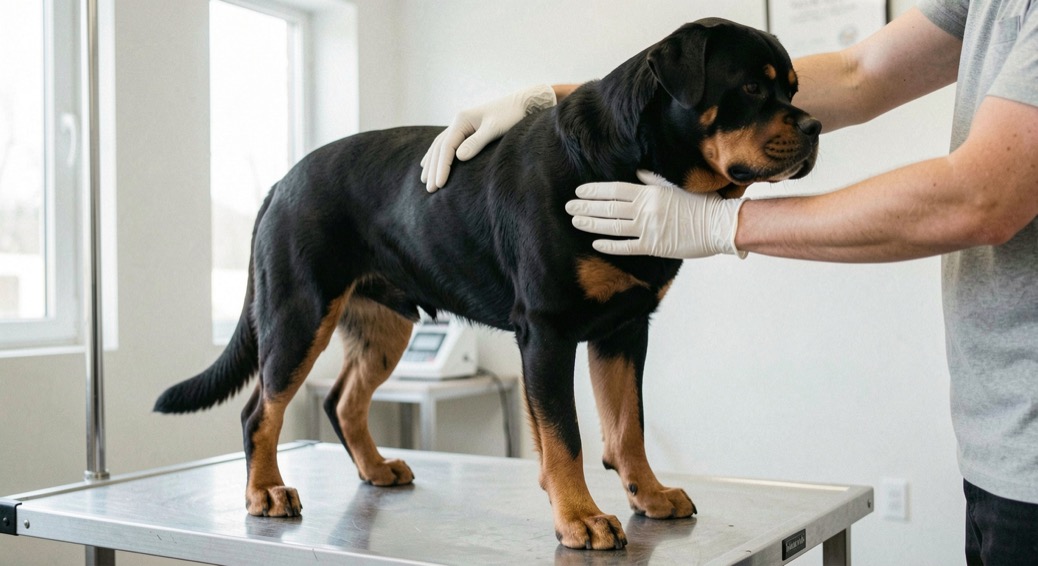
Section 02Health
Rottweiler Health: What Can Be Measured
Health in this breed sorts into three families: what an exam can measure, what medicine can treat, and what an owner can only watch. Each family has its page.
-
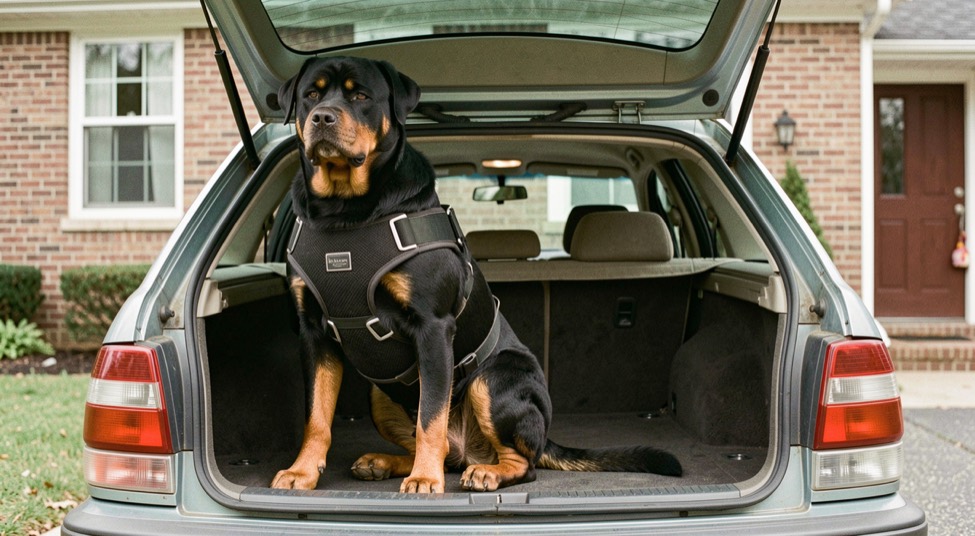
Section 03Adoption
Adopting a Rottweiler
The machinery of an adult adoption, end to end: what the dossier asks, what the reference calls check, what a home visit looks at, and what the first month does to a dog and a household.
-

Section 04Training
Training a Rottweiler That Has a Past
The only survey without a historical address. It starts from the dog that arrives already formed: its body language, its size, and the routine that carries both.
-

Section 05Law and Insurance
North Carolina Dog Law and Insurance
A state can impose no breed restriction while an insurer refuses the household. This survey treats the two regimes together, because the reader meets them together.
-

Section 06Notebook
Notebook: What Changed This Month
The dated register of the magazine: what changed, in which document, and which page of the site takes it into account.
Every page of the magazine, by month
The dated register of the publication. Each entry names the document it reads.
-
September 2026
-
Adoption
A pedigree cat joins a dog household
A practical file for bringing a pedigree cat into a home with a dog: breeder questions, a slow first meeting, separate resources and the first weeks under one
-
Health
A Rottweiler puppy's first year, month by month
A month by month look at a Rottweiler puppy's first year: birth, weaning, vaccination, coat, and the checkpoints a household diary should carry.
-
The Breed
Comparing Breeds: Size, Coat and Drive
How a French breed guide frames morphology and temperament, and what Carolina Rottweiler readers can borrow when comparing size, coat and working drive.
-
Law and Insurance
Georgia Open Records: The Three Day Clock
How to file an open records request with a Georgia agency, the three business day response window, copy fees, and what a dog owner can realistically obtain.
-
Law and Insurance
How a civil case moves in Mississippi courts
Filing, discovery, trial and appeal in Mississippi civil courts, explained from the public record: deadlines, comparative fault and the route a case takes.
-
Law and Insurance
Image licensing basics for breed magazines
Copyright, rights-managed versus royalty-free, territory and duration: what a breed magazine needs to know before using its own pictures.
-
Health
MDR1 and Ivermectin: Breed Risk and Emergency Signs
How the MDR1 mutation raises ivermectin risk in Collies and related breeds, which signs mean an emergency, and which drugs to keep off the fridge door.
-
Health
Progressive Retinal Atrophy in Dogs: prcd, DNA Tests
How the prcd mutation causes progressive retinal atrophy in dogs, what DNA testing shows, and how owners manage life as a dog loses its sight.
-
The Breed
Reading a breed file before you buy
A breed file should cover profile, coat, the first year and the limits of general advice. Here is how to read one before you commit.
-
The Breed
Reading a Canadian Conformation Entry
Eligibility, the official calendar, and what a show record proves about a Rottweiler, plus how to check a dog's paperwork before you trust it.
-
Law and Insurance
Reading a Maine court docket
A Maine court docket records every filing and order in a case. Learn how the Law Court, Superior Court and District Court differ, and how to access records.
-
Law and Insurance
Reading a Service Contract and a Lease Before You Sign
How to read scope, payment, termination and amendments in a service contract or a lease before signing, with a clause-by-clause method that works for both.
-
The Breed
Small Companion Breeds: Size, Coat, Breeders
A Bolonka Zwetna guide shows how small companion breeds differ in size, coat care and breeder checks, and what to verify before paying a deposit.
-
Training
Starting a Dog on a Load, the Draft Horse Way
Ground driving and harness work borrowed from draft horse practice: how to start a dog on a load slowly, calmly and without a wreck.
-
Training
The biology of the eye in herding dogs
What instinct research says about the eye, drive and bidability in herding breeds, and how much of that picture transfers to a guarding breed like the
-
Law and Insurance
Wills and Living Trusts in Iowa: A Practical Guide
Wills or revocable living trusts in Iowa, naming a guardian for minor children, providing for a dog, and what marriage or remarriage changes.
-
Training
Working Titles and Registry Rules, Explained
How FCI and AKC breeding rules differ, what a working test title actually proves, and where to read the documents behind the paperwork.
-
The Breed
Before you adopt an adult: how to research a breed you do not know yet
Most households learn the breed after they adopt the dog. This page reverses the order: a method for reading a breed you do not know, and the questions that keep the reading honest.
-
The Breed
Carting with a Rottweiler: the draught dog tradition
Before it guarded, the breed pulled. Carting is the working tradition that survives into a scored test, and an adopted adult can still enter it with the right preparation.
-
Training
Choosing a first class for a grown dog
The class made for puppies will not fit a dog that arrives with a past. Reading a class before signing up is a skill borrowed from other beginners’ rooms.
-
Training
Reading the water with a dog at heel
The river walk is the breed’s idea of a good day and the handler’s exercise in attention. The people who read water for a living have a method that transfers.
-
The Breed
Reading workmanship on what a dog wears
A ninety pound dog tests its equipment daily. The collector’s habit of reading construction instead of branding is the right tool for choosing what the dog wears.
-
The Breed
Studying the standard like a student
A breed standard is a dense text that rewards method. The study habits students use on hard material work just as well on the two documents that describe this breed.
-
Adoption
The daily rhythm that settles a dog
The research on newly homed dogs measures one thing returning first: rest. The household that builds a repeatable day is building the condition rest returns into.
-
Adoption
The dog and the bird: running a mixed-pet household
The resident animals were here first, and the incoming dog owes them a managed introduction. A mixed household runs on zones and schedules, not on hope.
-
Training
The dog when the household entertains
A houseful of guests is a stress test the adopted dog did not schedule. The plan that works is the one where the dog’s evening is decided before the first guest arrives.
-
Adoption
The dog’s file on the family computer
The modern dog file is a folder, not a binder. Keeping it findable, and keeping the disk it lives on from filling silently, is a small domestic discipline.
-
Health
The eye examination on a grown dog
The breed’s screening panel includes the eyes, and a certificate read properly is a different thing from a glance at a clear-eyed dog. What the exam covers, and what it cannot see.
-
Health
The medication question on a dog of unknown ancestry
An adopted adult often arrives with no reliable ancestry. One genetic mutation turns a routine prescription into a risk, and a cheap test settles the question for life.
-
Adoption
The story that comes with the dog
The file gives the dog a history. The honest reading treats that history as testimony: written by somebody, for a reason, under circumstances that shaped it.
-
Adoption
The yard the home visitor sees
A home visit reads the yard the way a coordinator reads a form: for what is true rather than what is staged. The useful preparation is the honest checklist.
-
The Breed
Tracing a dog record the way an archive does
Every dog that passes through a system leaves a paper trail. The method for reading it backward is borrowed from archival research, and it transfers almost unchanged.
-
The Breed
What a careful breeder keeps on file
Adopters sometimes meet breeders while researching, and the file a careful breeder keeps is the quickest way to tell a serious program from a seller of puppies.
-
The Breed
What a service record teaches an adopter
The dogs that served were documented the way crews were: in routine entries, not in stories. Reading a service record is a lesson in what documentation can and cannot carry.
-
Health
What incident records can and cannot say about a dog
Every number quoted about dangerous dogs rests on an incident record compiled by somebody, under rules somebody chose. Reading the method matters more than reading the figure.
-
Adoption
When a dog lives between two households
A dog can live well between two homes, but the arrangement has to be built rather than improvised. The architecture is the same one separated parents use, scaled to a dog.
-
Law and Insurance
When an ordinance names a breed
The state law reads the dog; some municipal codes read the label. The difference between the two regimes is the difference between a statute and an ordinance, and both have to be checked.
-
Adoption
When the message about a dog looks wrong
An adoption generates more email in a month than most households send in a year, and some of it is from people who were never holding a dog.
-
Trust
Legal notice and terms
The publisher of record, the limits of what these pages are, and the rules for using them, stated without a company name because there is none to state.
-
Law and Insurance
North Carolina Dog Law and Insurance
A state can impose no breed restriction while an insurer refuses the household. This survey treats the two regimes together, because the reader meets them together.
-
Notebook
Notebook: What Changed This Month
The dated register of the magazine: what changed, in which document, and which page of the site takes it into account.
-
Health
Rottweiler Health: What Can Be Measured
Health in this breed sorts into three families: what an exam can measure, what medicine can treat, and what an owner can only watch. Each family has its page.
-
The Breed
The Rottweiler: A Breed Guide
Two official standards describe this breed, and they do not fully agree. This survey separates what the standards write from what folklore repeats.
-
Training
Training a Rottweiler That Has a Past
The only survey without a historical address. It starts from the dog that arrives already formed: its body language, its size, and the routine that carries both.
-
-
August 2026
-
The magazine
About this magazine
What this magazine is and how it works, on one page, without naming an organization or claiming a team.
-
Adoption
Adopting a Rottweiler
The machinery of an adult adoption, end to end: what the dossier asks, what the reference calls check, what a home visit looks at, and what the first month does to a dog and a household.
-
Adoption
Adopting across state lines
The multi state footing of the domain, turned into a moving checklist: what follows the dog, what follows the address, what gets redone.
-
Adoption
Adopting an adult dog
The central angle of this magazine: with an adult, the unknown moves, it never disappears, and it is replaced method by method, by observation and measurement.
-
The Breed
Before you get a Rottweiler
Six questions that settle themselves before the arrival, from the weight the standards describe to the insurance call that decides more than any trainer.
-
Trust
Editorial standards
The page that makes the rest of the site verifiable: what counts as a source, how a figure is dated, how a correction is published and signalled.
-
Adoption
Fostering an adult Rottweiler
The foster home as an observation post, with the observation grid nobody hands out: what to note, what to pass on, how to let go.
-
Adoption
Glossary
One page translating the vocabulary an adopter receives without explanation, each entry tied to the work it does in a record, a contract or a statute.
-
Health
Hip and elbow dysplasia in Rottweilers
Reading a grading document, converting it between systems, and deciding what to do with a limping adult: the one thing this cluster never finds in plain language.
-
Law and Insurance
Homeowners insurance and breed restrictions
The regime that never reads the statute book first: what an insurer weighs, what a lease adds on top, and the four questions worth asking in writing before a dog arrives.
-
Adoption
How a breed rescue works
The black box opened: where the dogs come from, what a dog costs before placement, why foster capacity is the only real limit, and what a state expects on paper.
-
Law and Insurance
North Carolina’s dangerous dog procedure
The state procedure followed step by step, article by article, keeping what the text writes apart from what a county’s practice adds around it.
-
Health
Osteosarcoma and lymphoma in Rottweilers
The two diagnoses that weigh heaviest in this breed, treated through what an owner can observe and decide, with the end of life welcomed plainly.
-
Trust
Privacy and data
Exactly what this site does with a reader’s data, on one short page, with no invented company name or postal address.
-
The Breed
Puppy or adult: what each choice really asks
The two entrances into the breed, compared on what is knowable on day one rather than on sentiment: the unknown moves, it never disappears.
-
Adoption
Rehoming a Rottweiler
A handover treated as a documentary operation, never a moral fault, with the exact file the next home is waiting for.
-
Trust
Sponsored content
The commercial rules written before any commerce exists: labelling, closed subjects, editorial control, and one address for a request.
-
Adoption
The adoption process, step by step
The seven standard steps of a breed adoption, with what each step verifies, what a candidate can prepare, and what usually sets the pace.
-
Training
The body language of fear
Reading fear on a dog whose broad head, heavy flews and dropped ears blur most of the signals the general literature describes.
-
Resources
The documents worth reading
An annotated bibliography rather than a directory: each primary document, what it settles, what it does not say, and the date it was last read.
-
Adoption
The first thirty days
A printable chronology in three time blocks, resting on what research actually measures in a dog leaving a shelter, not on the three day rule that circulates without a source.
-
Notebook
The founding issue is online
The magazine opens with the two standing references published: the adult screening table and the checklist of the first thirty days. The standards comparison and the adoption survey carry the rest of the issue. Later entries in this notebook will track the documents as they move.
-
The Breed
The two Rottweiler standards, point by point
Two official documents describe this breed, and on several points an owner reading both would meet two different dogs. Here is where they agree, where they part, and which text answers which question.
-
Health
What can still be checked on an adult Rottweiler
The screening documentation turned towards the adopter: a puppy buyer reads a result, an adopter can only order an exam, and this table says which exam still means something.
-
Health
When to spay or neuter a Rottweiler
Neutering age as a trade between two measured risks in this breed, with the cohort size next to every percentage, never as a universal rule.
-
Training
Why a Rottweiler does not live outside
A question asked every summer in the Southeast, answered with the physics of heat and the behavior of a guard dog left alone behind a fence.
-
The magazine
Write to the editors
A contact page without a form: one address, three reasons to write, and what to attach so the reply is worth the wait.
-
Notebook
The dangerous dog articles, reread together
North Carolina General Statutes 67-4.1 through 67-4.4 have been reread in full for the law survey. The procedure holds as summarized: an owner has three days to appeal a designation and is entitled to a hearing within ten days, and violating the precautions of 67-4.2 is a Class 3 misdemeanor.
-
Notebook
The screening panel keeps its 2019 date
The parent club mandatory practices, as most recently published, remain the 2019 version consulted in 2026. Every line of the screening table therefore carries that reading date, and a newer document would reopen the table line by line before anything else moves.
-
-
July 2026
-
Notebook
What the foster study actually measured
The 2019 study across five American shelters keeps coming up in reader mail, often retold as a decompression rule it never claims. What it reports is rest: even one or two nights in a foster home gave dogs their longest uninterrupted rest of the whole study period. The checklist of the first thirty days is built on that measured thing.
-
Notebook
The UC Davis neutering figures, handled carefully
The 2020 UC Davis study covers 854 Rottweilers in its breed section, with joint disorders reported in 8 percent of intact males and 16 percent of intact females. The published subgroups do not sum to the published total, so the table of the neutering page quotes the total and the subgroups exactly as written, never added together.
-
Notebook
A 2002 cohort, still the reference for bone sarcoma
The bone sarcoma finding quoted across this magazine comes from a 2002 cohort of 683 North American Rottweilers, where dogs of both sexes neutered before one year showed roughly a one in four lifetime risk. It stays the reference because no later cohort of this size covers the breed alone, and it is always presented with its date.
-
Notebook
The grading grid, checked against its publisher
The correspondence between the seven step American hip scale and the A to E ratings of the FCI systems has been checked again against the registry grid. It matters most when an imported dog arrives with paperwork graded in letters, and the glossary now defines both scales side by side.
-
-
June 2026
-
Notebook
Live statistics stay on the live page
The orthopedic registry publishes current breed statistics and updates them continuously. This magazine prints no percentage for the breed without a dated reading of that page, so the health survey points to the live registry figure rather than freezing a number that will be wrong within a year.
-
Notebook
The breed page and the working group
The American Kennel Club places the Rottweiler in the working group, which is verified on the club breed page. The same page carries a life expectancy figure that this magazine does not reprint: a number read without its date of reading ages badly, and the club page is the better source of it.
-
Notebook
The FCI text and the natural tail
The FCI standard number 147, in its 2018 translation, describes the tail in its natural condition. Every photograph on this magazine shows a natural tail, and the standards comparison now explains why the reference text reads the way it does.
-
The standing resources
Cited by every section, dated on the day they were last read.
-
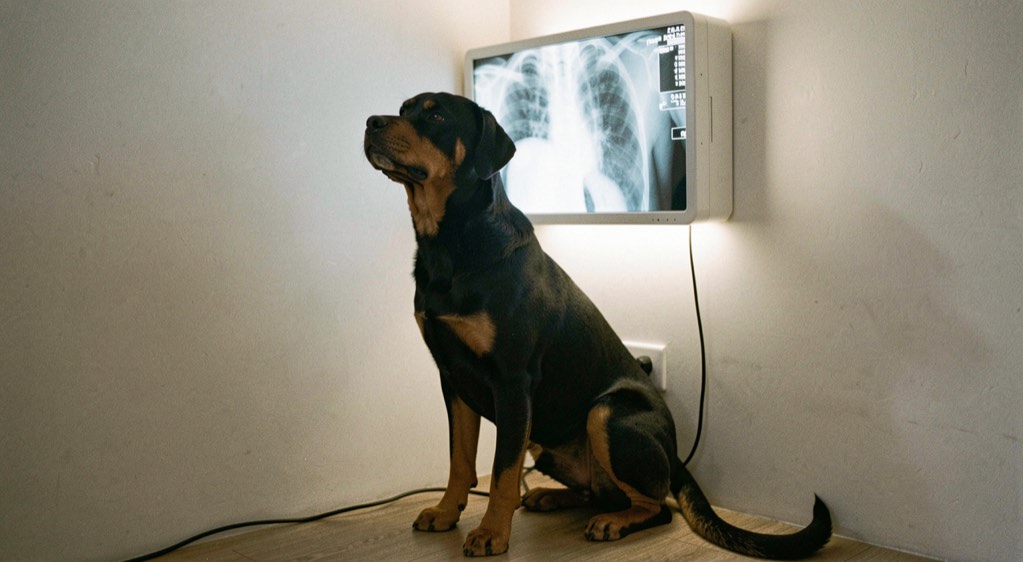
ReferenceAugust 18, 2026
What can still be checked on an adult Rottweiler
The screening documentation turned towards the adopter: a puppy buyer reads a result, an adopter can only order an exam, and this table says which exam still means something.
-
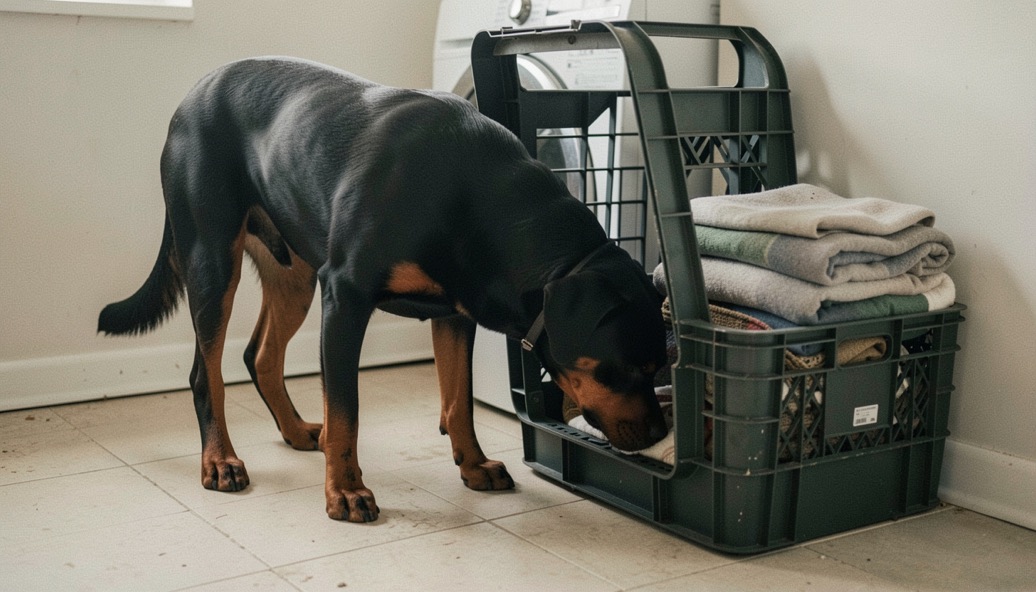
ReferenceAugust 18, 2026
The first thirty days
A printable chronology in three time blocks, resting on what research actually measures in a dog leaving a shelter, not on the three day rule that circulates without a source.
-

ReferenceAugust 18, 2026
Glossary
One page translating the vocabulary an adopter receives without explanation, each entry tied to the work it does in a record, a contract or a statute.
-

ReferenceAugust 18, 2026
The documents worth reading
An annotated bibliography rather than a directory: each primary document, what it settles, what it does not say, and the date it was last read.
Three pages to begin with
The two standards, the machinery of an adoption, and the contract that decides the household.
-

The BreedAugust 18, 2026
The two Rottweiler standards, point by point
Two official documents describe this breed, and on several points an owner reading both would meet two different dogs. Here is where they agree, where they part, and which text answers which question.
-

AdoptionAugust 18, 2026
The adoption process, step by step
The seven standard steps of a breed adoption, with what each step verifies, what a candidate can prepare, and what usually sets the pace.
-

Law and InsuranceAugust 18, 2026
Homeowners insurance and breed restrictions
The regime that never reads the statute book first: what an insurer weighs, what a lease adds on top, and the four questions worth asking in writing before a dog arrives.
Every dated entry above names the document where the change reads. Figures that move with time, like registry statistics, carry their reading date or point to the live page instead of a number. The standing references behind this almanac are the adult screening table and the glossary an adopter receives.
The pages kept in hand
These references stay visible, are reread as documents change, and remain useful after the next article arrives.
-
The BreedAugust 18, 2026
The two Rottweiler standards, point by point
The two standards read together, with the points where their descriptions stop agreeing.
-

HealthAugust 18, 2026
Hip and elbow dysplasia in Rottweilers
A plain-language route through hip and elbow grades, conversions, and the first response to a limp.
-
AdoptionAugust 18, 2026
The adoption process, step by step
The adoption file in order, showing what each step verifies and what a candidate can prepare.
-

TrainingAugust 18, 2026
The body language of fear
A careful reading of fear signals on the broad-headed, heavy-flewed dog this site describes.
-
Law and InsuranceAugust 18, 2026
Homeowners insurance and breed restrictions
The questions to put in writing before a Rottweiler enters a home, lease, or policy.
Doors beyond the desk
A short outside reading shelf for the questions that continue past this magazine.
These outside resources meet adjacent needs without standing in for the Rottweiler pages above.
-
Training
Orthopedic shepherd resource
The shepherd-focused orthopedic material can extend the reading on dysplasia, while its breed-specific data should not be transferred automatically to Rottweilers.
-
Training
Ways to help shelter dogs
The adoption guide gathers concrete ways to help a shelter dog, including useful commitments for readers who cannot adopt this season.
-
Training
Shepherd Health Journal
A veterinary blog on the practical health of herding and flock dogs: hip scoring, cruciate tears, heatstroke, the MDR1 gene and the aging working dog.
-
Training
a beadwork guide
For readers who make and mend things by hand: bead sizes and materials, how to read a materials sheet, and how to plan a piece from its limiting join.
-
Training
a sailmaker's fieldbook
For the household that also keeps a boat: choosing sailcloth, measuring and inspecting a sail, and setting a rig for the wind that is actually blowing.
-
Training
beer, from grain to glass
A brewing guide for the kitchen table: how to taste and compare styles, how to serve a beer properly at home, and the first steps of amateur brewing.
-
Training
a Sierra Foothills wine atlas
A documented atlas of the wines of the Sierra Foothills: the appellations and their counties, the grapes of the zone, and the archived record of one vineyard.
-
Training
a magazine on stunt work
An editorial magazine on stunt work and set safety: the disciplines of action, the production systems behind them, and the archive the craft keeps.