The Breed
Comparing Breeds: Size, Coat and Drive
How a French breed guide frames morphology and temperament, and what Carolina Rottweiler readers can borrow when comparing size, coat and working drive.
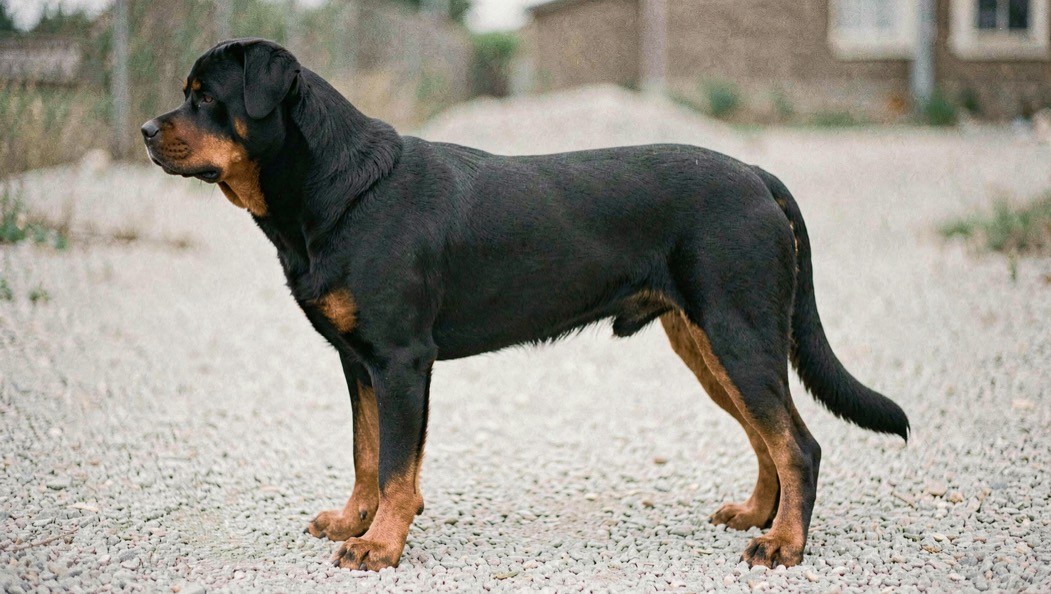
Comparing dog breeds starts with three observable facts: how the dog is built, how it is covered, and what it was bred to do. A French breed guide, Chien Race Guide Complet des Races de Chiens, organizes its material along exactly those lines, moving from morphology and temperament by breed to education and daily life, then to health, grooming and breeding. That order is useful for anyone who wants to compare breeds without reducing the dog to a single trait.
Morphology and temperament are not separate chapters in a real dog. A Rottweiler's substance and its calm, self-possessed bearing belong to the same animal, and a breed guide that treats them together is easier to use than one that lists measurements alone. The French breed guide covers breeds present in France, from the Chien-Loup Tchecoslovaque to the Bichon Maltais, and its structure reflects the questions owners actually ask.
What does morphology actually tell you about a breed?
Morphology is the study of form: height, weight, proportions, head shape, ear set, tail carriage, angulation and gait. In a breed guide, these are not cosmetic details. They predict how a dog will move, how much space it needs, how it will handle stairs, heat, long walks or a cart harness.
A heavy, short-coupled dog with a broad chest and a short muzzle is built for a different job than a light, long-legged dog with a narrow chest. The first will generally be slower to mature, more prone to overheating, and less suited to repetitive jumping. The second may cover ground more easily but carry less mass for pulling or protection work.
Robe and skin belong here too. A double coat with a dense undercoat sheds seasonally and insulates against cold and sun. A short single coat sheds less visibly but offers less protection. A long coat needs more brushing and picks up more debris. None of these is a defect. They are trade-offs, and a breed guide that states them plainly lets a reader match the dog to the climate and the routine.
Size is the most overrated single number. A 40 kg dog and a 55 kg dog of the same breed may differ in exercise tolerance, medication dosing, car space and the strength needed on leash. Breed standards give ranges, not guarantees, and the individual dog in front of you is the final measure.
How does a breed guide frame temperament and drive?
Temperament is the dog's typical emotional response to the world: confident or cautious, outgoing or reserved, quick to recover or slow. Drive is what the dog is motivated to do: chase, herd, retrieve, guard, pull, dig, solve problems. They interact. A high-drive dog with a steady temperament is workable. A high-drive dog with a nervous temperament is a management problem.
A useful breed guide separates the two. It describes the breed's historical function, then the behaviors that function produced. A livestock guardian breed was selected to live with stock and repel threats without constant human direction. A herding breed was selected to move animals on cues and to read pressure. A companion breed was selected to be easy to live with. Those histories still shape what the dog finds rewarding today.
For a Rottweiler, the historical function was droving and drafting: moving cattle, pulling a cart, guarding the money and the master. That history explains the breed's physical substance, its willingness to work in close contact with a handler, and its reserved response to strangers. It does not explain every individual dog, but it sets the baseline.
Readers comparing breeds should ask three questions of any description. What was this dog bred to do? How much daily work does that require? What happens when the work is not available? The answers are more predictive than any adjective like loyal or intelligent.
Education and daily life: what changes between breeds?
Exercise needs vary more than most people expect. A breed described as moderate may still need an hour of structured activity plus mental work. A breed described as low-energy may still need daily walks and enrichment. The gap between a bored dog and a satisfied dog is often fifteen minutes of training, not an extra mile.
Sociability with people and other dogs is another axis. Some breeds are naturally tolerant of strangers and other animals. Others are reserved and need early, careful exposure. A breed guide that names this difference helps a future owner choose a dog that fits the household, not a dog that will be corrected for being itself.
Garde, chasse, compagnie: guarding, hunting, companionship. These are the broad categories a French guide uses, and they map onto real decisions. A guarding breed needs a defined territory and clear rules. A hunting breed needs scent work and off-leash outlets where legal. A companion breed needs contact and routine. Mixing categories without adjusting the routine is where most behavior problems begin.
Conduite avec des maitres disponibles, handling with available owners, is the practical test. A breed that bonds closely and works with a handler will struggle in a home where the owner is absent twelve hours a day. A breed selected for independent work may handle that better, provided its exercise and enrichment needs are met by someone.
Health, coat and breeding: where do the costs sit?
Coat type drives grooming time and cost. Long coats need regular brushing and professional trimming. Double coats blow twice a year and need undercoat removal. Short coats need less brushing but still need nail care, ear checks and dental care. A breed guide that lists coat type alongside health concerns lets a reader estimate the weekly commitment, not just the purchase price.
Robustness is not the same as health. A robust dog may still carry breed-specific risks. Hip and elbow evaluation, cardiac screening, eye examination and, in some breeds, genetic testing are standard tools. A responsible breeder documents them. A buyer should ask for the results, not the assurances.
Suivi sanitaire, health follow-up, is a habit rather than a single test. Weight tracking, dental checks, parasite prevention and annual examinations catch problems while they are cheap to manage. Large, deep-chested breeds also warrant awareness of bloat signs and a plan for after-hours care.
Choosing a puppy is the last step, not the first. Decide the size, coat, drive and daily routine you can sustain, then look for a litter bred with those traits and health results in view. Meeting the dam and, where possible, the sire tells you more than a photograph.
Can you compare breeds without a scorecard?
Yes, if you compare on the same axes every time. Write down, for each breed you consider: adult size range, coat type and grooming time, historical function, daily exercise and mental work, sociability with people and animals, and known health screening. Then compare those lists to your actual week.
The breed that fits is the one whose needs you can meet on an ordinary Tuesday, not on a vacation week. Morphology tells you what the dog is built to do. Temperament and drive tell you what it wants to do. Health and coat tell you what it will cost. A guide that presents all four is doing its job.
For readers who want a French-language reference organized by breed, the Chien Race Guide Complet des Races de Chiens is one such resource, aimed at future adopters, working and companion dog owners, and amateur breeders. Use it the way you would use any breed guide: as a starting point for questions you then put to breeders, veterinarians and owners of the breed you are considering.