Survey 05
North Carolina Dog Law and Insurance
A state can impose no breed restriction while an insurer refuses the household. This survey treats the two regimes together, because the reader meets them together.
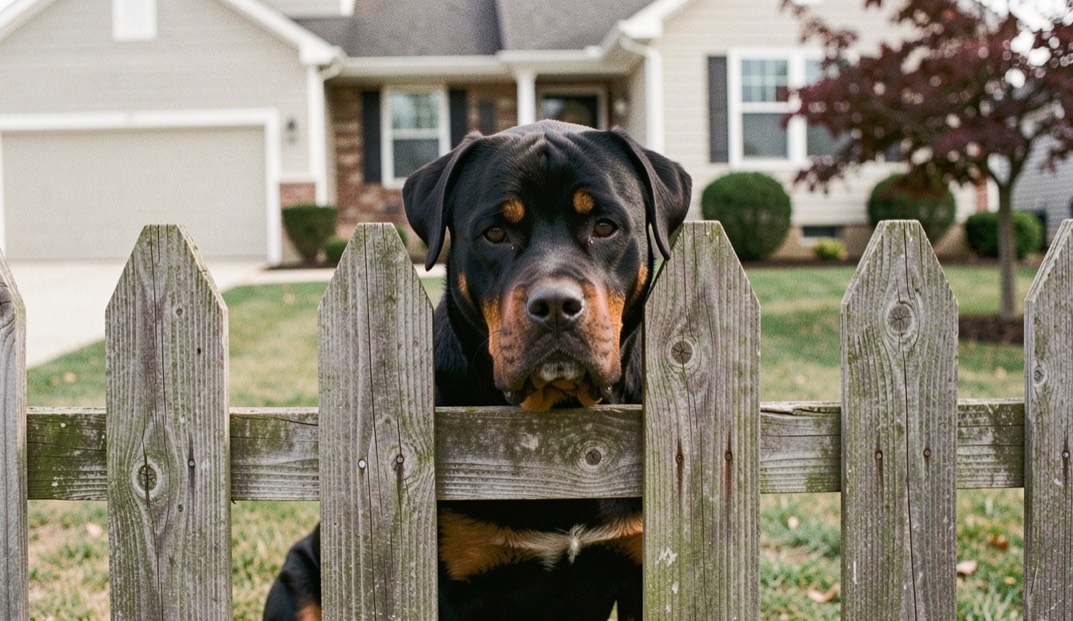
The rules that reach a Rottweiler household in North Carolina come from three different authors, and confusing them is the source of most of what gets repeated about the subject. The state writes a statute that judges the individual dog and never names a breed. The municipalities write ordinances, and some of those ordinances do name breeds. The insurance industry writes contracts, and a contract can reach where a statute never would. A household that knows which author is speaking can check any claim in minutes; a household that mixes them up will believe both that the law forbids its dog and that no paper can touch it, and both beliefs are wrong. This survey keeps the three regimes apart and treats them in the order a household meets them, and the vocabulary the three share, from strict liability to a restricted breed list, is defined once in the legal glossary.
The state statute: judged as an individual
North Carolina’s dog law sits in chapter 67 of the General Statutes, and its article 1A is the part a Rottweiler household needs to know. Article 67-4.1 carries the definitions, and the word that matters in it is dangerous: the statute defines a category of dog by what an individual animal has done, not by what it looks like. No section of the article names a breed, and that absence is not an oversight but the organizing fact of the whole legal picture in the state. The designation procedure of 67-4.2 runs through the owner with notice, a right to appeal within three days, and a hearing before a district court judge within ten days; a dog designated dangerous then carries legal precautions, and ignoring them is a class 3 misdemeanor. Article 67-4.3 attaches consequences when an attack causes medical care costing more than one hundred dollars, and 67-4.4 closes the article with the rule that reaches furthest into ordinary life: the owner of a dog the process has designated dangerous is strictly liable in civil court for injuries that dog causes, and strictly liable for property damage the dog causes to livestock. Strict liability means no argument about negligence is available; the designation itself does the work. The step by step procedure, with every article number attached to every step, is the survey’s reference page, the dangerous dog procedure.
The municipal layer: where breed rules actually live
Because the state statute names no breed, the breed specific rules an American reader hears about live one level down, in municipal and county ordinances, and North Carolina leaves its municipalities room to write them. Some places in the country have written ordinances that name the breed, and a reader who moves within or into the state needs to check the local code rather than assume anything from the state’s silence. The checking is cheap and this survey refuses to do it secondhand: municipal codes are published, a city clerk answers in writing, and an ordinance that cannot be quoted from the current code does not exist as far as these pages are concerned. The survey prints no list of breed specific towns, because such a list ages between two legislative sessions, and a list that ages silently is worse than no list. What the survey provides instead is the method: find the code, read the animal control chapter, quote the section number, and date the reading. The bibliography in the primary documents names the code libraries that make that an afternoon’s work.
The private contract: insurance and the household
The third author is private, and it is the one that actually turns a breed into a household problem. A homeowners or renters policy is a contract, and insurers underwrite it with breed considerations that no statute forbids: some carriers refuse the household outright, some cover it with an exclusion for the dog, and some do not ask. Nothing in North Carolina law currently prevents an insurer from considering breed, which is why the insurance page exists and why the survey treats the contract as a regime of its own rather than a footnote to the statute. The practical material, how carriers ask about breed, what a canine exclusion does to a policy, what questions to put in writing before signing, and where a renter stands, is homeowners insurance and breed restrictions. One boundary line is worth stating here as well: a lease is a contract too, and a landlord’s pet policy binds the tenant whatever the city code allows, so the check for a renting household runs through both documents.
How to check any rule before relying on it
The method is the same whatever the author of the rule, and it fits in four lines. Identify the author: statute, ordinance or contract, because each lives in a different place and dies a different death. Find the text itself, in the General Statutes, in the municipal code or in the policy wording the carrier issued, and read the section rather than a summary of it. Quote the section number and write down the date you read it, because statutes are amended, codes are recodified and insurers refile their forms. And keep the document: a screenshot of the code with its section header, a PDF of the policy page, the statute text with the article number visible. Every claim on the pages of this survey was checked that way, and a reader who follows the same four steps holds exactly the same ground the survey does, with no authority in between.
Across a state line
The three regimes recombine differently in South Carolina, Virginia and Maryland, which matters to any adopter moving with a dog or adopting across a border, and the differences that survive the trip, liability rules, local ordinances and insurer practice, are compared in adopting across state lines. The survey’s standing method holds everywhere and it is the reason these pages cite article numbers instead of summaries: a rule a reader cannot quote from its own current text is a rumor, and a household making decisions about this breed deserves better than rumors.
Two municipal questions get pages of their own: reading the incident data works through the county’s numbers behind a designation, and when an ordinance names a breed checks the town code where the label still does legal work.
The other doors of the magazine: The Breed, Health, Adoption, Training and Notebook. Every one of them points back to the screening table.
In this section
9 pages, newest first.
-
Law and InsuranceSeptember 15, 2026
Image licensing basics for breed magazines
Copyright, rights-managed versus royalty-free, territory and duration: what a breed magazine needs to know before using its own pictures.
-

Law and InsuranceSeptember 15, 2026
Georgia Open Records: The Three Day Clock
How to file an open records request with a Georgia agency, the three business day response window, copy fees, and what a dog owner can realistically obtain.
-

Law and InsuranceSeptember 15, 2026
Wills and Living Trusts in Iowa: A Practical Guide
Wills or revocable living trusts in Iowa, naming a guardian for minor children, providing for a dog, and what marriage or remarriage changes.
-

Law and InsuranceSeptember 15, 2026
Reading a Maine court docket
A Maine court docket records every filing and order in a case. Learn how the Law Court, Superior Court and District Court differ, and how to access records.
-

Law and InsuranceSeptember 15, 2026
How a civil case moves in Mississippi courts
Filing, discovery, trial and appeal in Mississippi civil courts, explained from the public record: deadlines, comparative fault and the route a case takes.
-

Law and InsuranceSeptember 15, 2026
Reading a Service Contract and a Lease Before You Sign
How to read scope, payment, termination and amendments in a service contract or a lease before signing, with a clause-by-clause method that works for both.
-

Law and InsuranceSeptember 12, 2026
When an ordinance names a breed
The state law reads the dog; some municipal codes read the label. The difference between the two regimes is the difference between a statute and an ordinance, and both have to be checked.
-

Law and InsuranceAugust 18, 2026
North Carolina’s dangerous dog procedure
The state procedure followed step by step, article by article, keeping what the text writes apart from what a county’s practice adds around it.
-
Law and InsuranceAugust 18, 2026
Homeowners insurance and breed restrictions
The regime that never reads the statute book first: what an insurer weighs, what a lease adds on top, and the four questions worth asking in writing before a dog arrives.