Survey 04
Training a Rottweiler That Has a Past
The only survey without a historical address. It starts from the dog that arrives already formed: its body language, its size, and the routine that carries both.
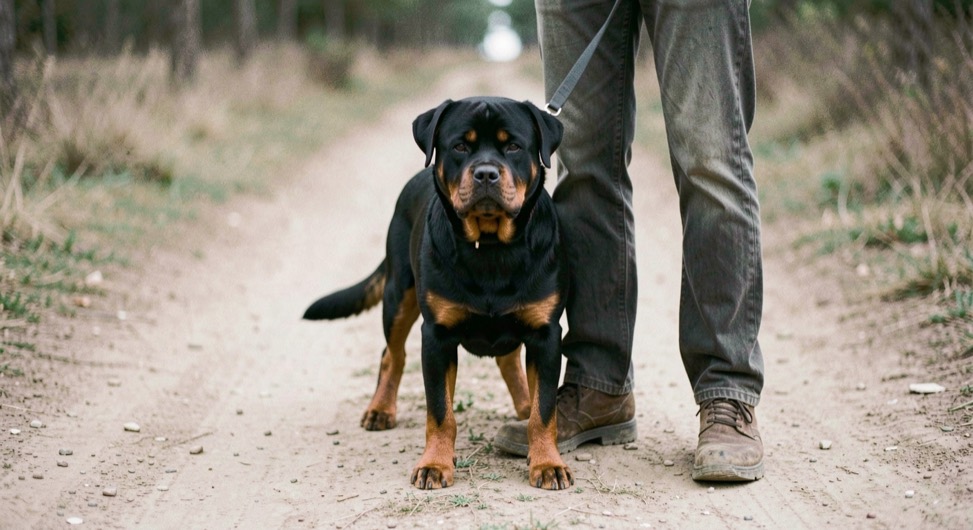
Every training book on the shelf assumes a puppy, and the dog this survey is written for is not one. An adult Rottweiler arrives with a history nobody can fully document: habits already installed, words it may already answer, fears it learned somewhere else from somebody else, and a body close to its final size and strength. Training that dog is less about installing things than about reading what is already there and adding to it deliberately. The general frame for that dog, what is knowable on the day it arrives and what only shows up later, is adopting an adult dog. The survey keeps to that order throughout, reading first and correcting second, and it starts from the fact that shapes everything else: ninety pounds of animal communicates constantly, and a household that cannot read the communication ends up disciplining signals instead of answering them.
Reading before correcting
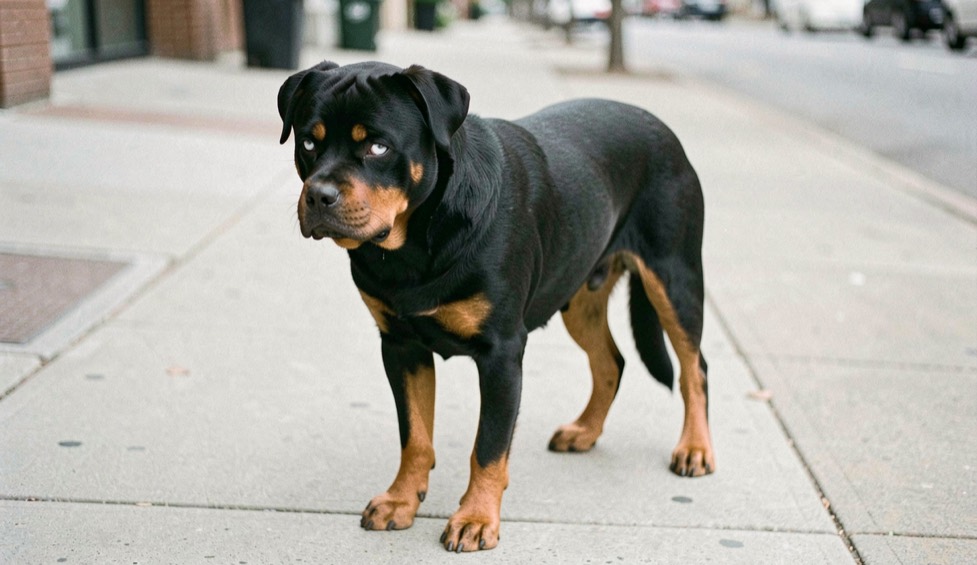
The foundational skill of the survey is literacy in the dog’s own signals. A lip lick, a head turn, a half moon eye, a shake off, a stiffening at the end of the leash: each is a sentence, and most of what households read as stubbornness or dominance is one of these sentences repeating because nobody answered it the first ten times. The vocabulary, signal by signal with the situations that produce them, is the opening article of the survey, the body language of fear. It is placed first on purpose: an adopter who can tell stress from defiance makes different decisions in week one, and the dog is the one who benefits from the difference.
The size question, handled honestly
A grown Rottweiler cannot be managed the way a puppy is managed, and pretending otherwise is how doorways and staircases become accident scenes. Handling a dog this size is a mechanical skill: a six foot leash and a flat collar or well fitted harness, hands that learn to give direction through the leash rather than force through it, door manners built as a habit rather than as a battle, and a household rule that no member of it, child included, is outweighed by the dog in an uncontrolled situation. None of that is dominance theater; all of it is engineering, the way one arranges a kitchen so the heavy things are lifted once instead of daily.
Indoor life, introductions and the Carolina summer
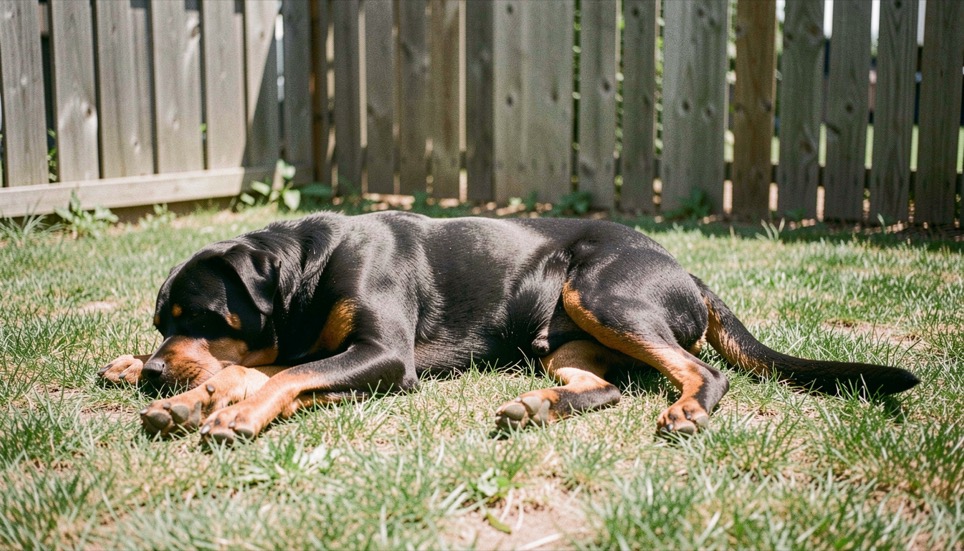
The survey is built for a dog that lives indoors, because this breed kept outdoors in the Carolina humidity and heat is a dog in physiological trouble for most of the summer. The measured case, with the coat and the cooling mechanics described, is the work of why not an outside dog. Indoors, the work of the first weeks is sequenced widening: rooms opened one at a time, resident animals met separately and briefly with an exit planned for both sides, and the neighborhood taken street by street, so that every enlargement of the dog’s map is small enough to be absorbed the same day it happens. That sequence is not invented here; it is the arrival month’s own checklist, the first thirty days, which this survey treats as its prerequisite and does not repeat.
What the routine carries
What remains after the first month is not a training program but a routine that makes training unnecessary most days: the same door for outings, meals at the same hours, handling practiced in small doses so the veterinarian’s appointment stays routine, and two or three house words used consistently by everybody in the household. Consistency is the whole trick, and it is also the part no equipment replaces, because a word that means one thing from one person and another thing from the rest of the household teaches a dog to negotiate rather than to answer. The survey’s standing claim is a modest one and it is stated here so the articles can be held against it: a well kept adult Rottweiler is the product of observation and repetition, not of intensity, and no technique in this survey requires equipment a household does not already own or a talent nobody arrives with.
The first room where that reading gets practiced in company is chosen in choosing a first class for a grown dog.
The other doors of the magazine: The Breed, Health, Adoption, Law and Insurance and Notebook. Every one of them points back to the screening table.
In this section
8 pages, newest first.
-
TrainingSeptember 15, 2026
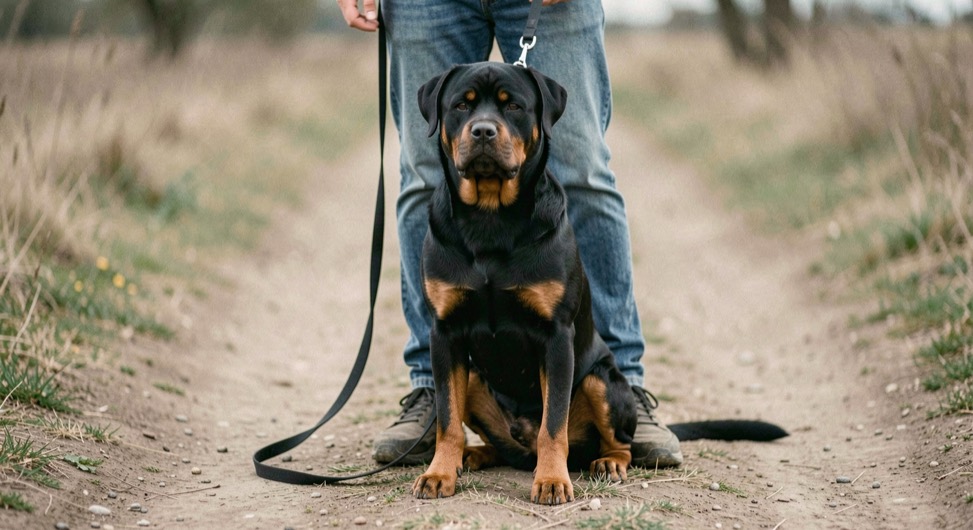
Starting a Dog on a Load, the Draft Horse Way
Ground driving and harness work borrowed from draft horse practice: how to start a dog on a load slowly, calmly and without a wreck.
-
TrainingSeptember 15, 2026
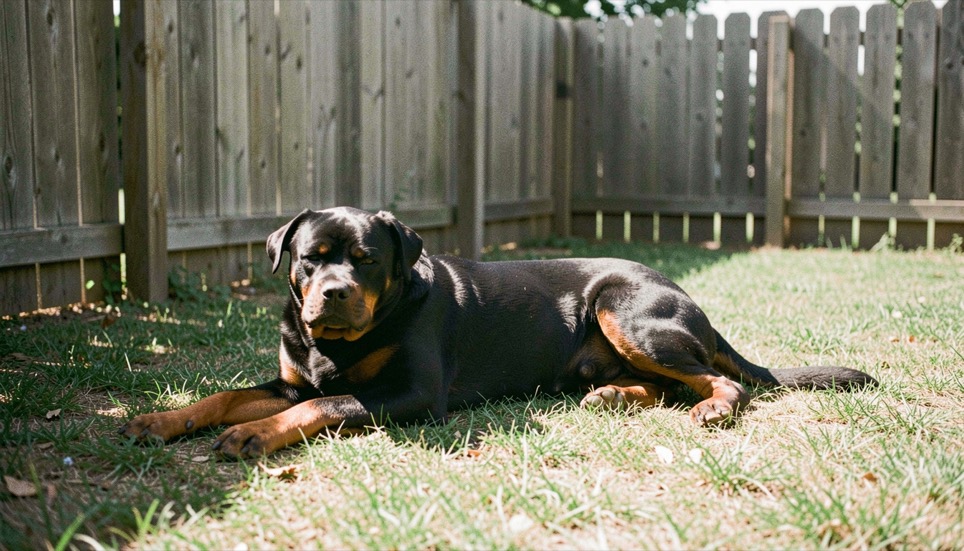
The biology of the eye in herding dogs
What instinct research says about the eye, drive and bidability in herding breeds, and how much of that picture transfers to a guarding breed like the
-
TrainingSeptember 15, 2026
Working Titles and Registry Rules, Explained
How FCI and AKC breeding rules differ, what a working test title actually proves, and where to read the documents behind the paperwork.
-

TrainingSeptember 12, 2026
Choosing a first class for a grown dog
The class made for puppies will not fit a dog that arrives with a past. Reading a class before signing up is a skill borrowed from other beginners’ rooms.
-

TrainingSeptember 12, 2026
Reading the water with a dog at heel
The river walk is the breed’s idea of a good day and the handler’s exercise in attention. The people who read water for a living have a method that transfers.
-

TrainingSeptember 12, 2026
The dog when the household entertains
A houseful of guests is a stress test the adopted dog did not schedule. The plan that works is the one where the dog’s evening is decided before the first guest arrives.
-
TrainingAugust 18, 2026
The body language of fear
Reading fear on a dog whose broad head, heavy flews and dropped ears blur most of the signals the general literature describes.
-
TrainingAugust 18, 2026
Why a Rottweiler does not live outside
A question asked every summer in the Southeast, answered with the physics of heat and the behavior of a guard dog left alone behind a fence.