Adoption
Adopting an adult dog
The central angle of this magazine: with an adult, the unknown moves, it never disappears, and it is replaced method by method, by observation and measurement.
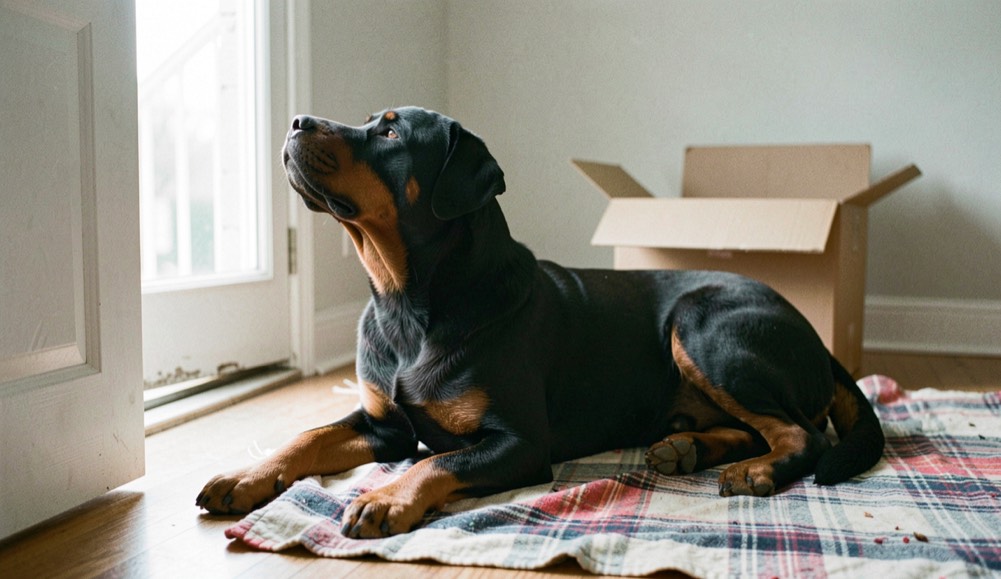
An adult dog arrives already made: grown into its size, set in its sleep, finished with teething, and carrying a history nobody handed over in full. That is the bargain, and most of the anxiety around it comes from reading the bargain backwards. The unknown does not disappear when the paperwork is signed; it moves. It moves out of the future, where a puppy keeps everything hidden for two years, and into the past, where the dog already is whatever it is. Living well with an adult is mostly the craft of working that moving unknown down to size, week by week, with observation in place of imagination.
What the record actually contains
A record for an adult placement usually holds four kinds of paper, and it pays to know which kind is which. Intake notes: where the dog came from, on what date, in what condition, and what the first handlers wrote down. A veterinary record: vaccinations, heartworm testing and prevention, alterations, and anything treated or left untreated. Observation notes from whoever has held the dog since: an account of how it eats, sleeps and meets other animals, written by a household with no stake in flattering it. And the legal sheet: microchip number, identification, and the contract that will follow the dog to you. What the record never holds is the part people ask it for anyway, a certificate of character, or the reason a previous household let the dog go told from both sides of it.
Day one: what you can already see
Day one shows the body and the manners, and it is honest about both. Size and weight against the description, the condition of the coat, the set of the ears, the way the dog carries its natural tail: the physical reading starts before the collar comes off. So do the plain behaviors, which are worth more than the charming ones. How the dog takes food, whether it drinks in a new place, how it enters a door behind you, how it settles when the household goes quiet for the evening. What day one does not show is character under load. A dog that has traveled, waited and changed addresses inside a fortnight is running a program of restraint, and the dog you met on the first day is a careful version of itself.
Week one: what the routine reveals
The week reveals the routine, and the routine is the real instrument. Appetite settles or it does not. Sleep runs long and heavy, or it runs in watches with the head lifting at every sound. House training turns out to be known, half known or a project. The stairs acquire an opinion. Leash manners appear in the version the dog actually uses rather than the version the record claimed. Write all of it down as it happens, with dates: a notebook of small facts is the thing that replaces the missing history, and the same dated approach is what the first thirty days turns into a checklist for the entire month.
Week three: the dog that was not there at first
Week three is when the second dog arrives: the one that was not present at the beginning. Restraint thins, opinions form, and the dog tests what the household’s rules are actually made of, in ordinary ways: a bed that was allowed once, a doorway that becomes a post, a recall that used to be instant and now takes a beat. None of it reads as a flaw in the dog, and none of it reads as a mistake in the choice. It reads as a dog deciding that the household is permanent enough to negotiate with. The households that do well here are the ones that expected a second dog and answer it with the same routine that carried the first week, adjusted rather than restarted.
The history you will never have
Part of the past is simply gone, and saying so plainly is more useful than reconstructing it. Lineage, early rearing, the reason for a first surrender, the conditions of the years between: an adopted adult carries none of that on paper, and no interview recovers it. The gap costs less than it feels like it does. Medical decisions run on examination rather than on ancestry, and the examinations that still mean something on a grown dog are laid out in the screening table, from hips and elbows to heart and eyes, with the age at which each result becomes final. Behavior runs on what the dog does in front of you this month, and a theory of the past explains that no better than a horoscope does.
| When | What is knowable | What is still open | Worth writing down |
|---|---|---|---|
| Day one | Size, coat, carriage, how the dog takes food and settles | Character under load, house training, behavior away from home | What the dog did when the house went quiet |
| Day seven | Appetite, sleep pattern, leash manners, stairs, the first veterinary visit | How the dog handles novelty and other animals | The sleep map: where, how long, what wakes it |
| Week three | The second dog: opinions, tests of the rules, the settled self | The history that was never written down | The first negotiation, and how it was answered |
Replacing the story with observation
The discipline that replaces the story is observation with a vocabulary. A flattened ear, a shut mouth, a white show at the corner of the eye, a tail carried low and fast: these are facts from the grammar of body language of fear, and the page that names them is where observation starts. Facts accumulate into a picture of the dog you actually have. The picture has one more source worth mining, and it is the household that watched the dog before you did: a foster home that recorded how the animal handled a fortnight of ordinary life has done three weeks of your work, and the foster home is where that work happens. What you inherit is not the dog’s history. It is the first draft of the record you are about to keep.
Misreadings that cost households their nerve
- A quiet first week is neither suppressed trauma nor a guarantee. It is restraint, and the real reading starts when the restraint thins.
- A dog that has been returned before is not a defective dog. The account of why a placement ended is one household’s version, and it is a fact about the household as much as about the animal.
- A missing past does not make the medical picture unknowable. Examination answers most of what ancestry is asked to answer elsewhere.
- Week three testing is the dog deciding the household is real. Meeting it with a brand new rulebook instead of the old routine is the most common self inflicted setback of the first month.
The fork that led here is worth rereading once the dog is asleep on the floor: puppy or adult compares the two entrances into the breed on what each one keeps hidden, and the comparison changes shape once an adult is in the house. The dated notebook, the vocabulary of observation and the foster notes are the tools this magazine keeps returning to, because they are the ones that turn an unknown history into a known dog.
Three files this page leans on get pages of their own. The military version of the file a well documented dog carries is read in the service record’s lessons, the household that keeps a dog across two addresses is organized in the dog between two households, and the intake narrative itself is weighed in the story that comes with the dog.