Health
Progressive Retinal Atrophy in Dogs: prcd, DNA Tests
How the prcd mutation causes progressive retinal atrophy in dogs, what DNA testing shows, and how owners manage life as a dog loses its sight.
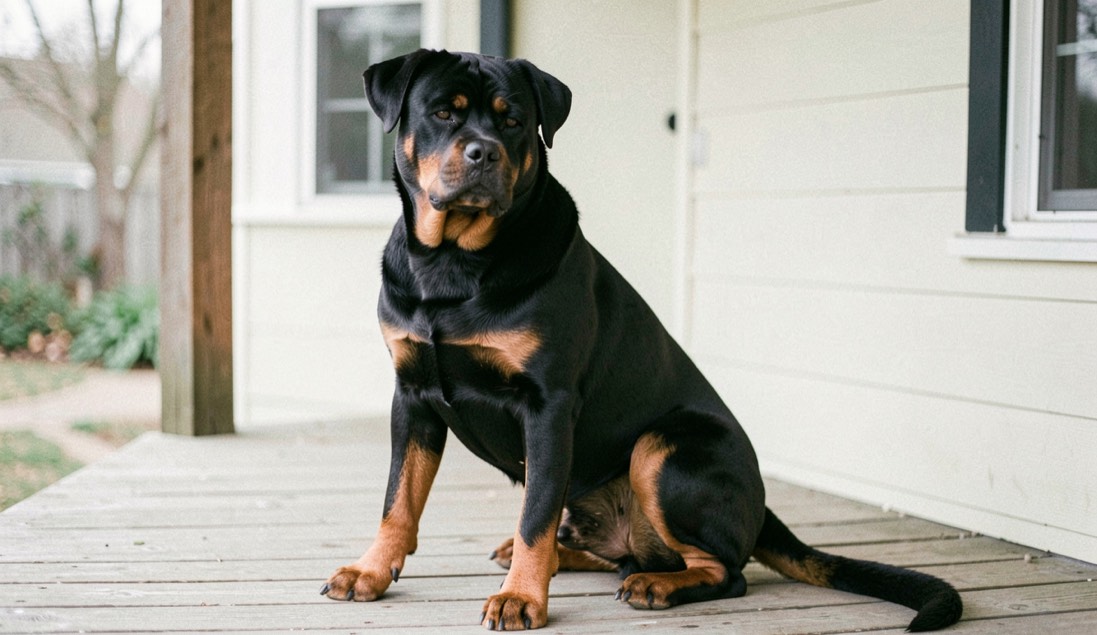
Progressive retinal atrophy in dogs is a group of inherited conditions in which the photoreceptor cells of the retina degenerate over months to years, and the prcd form is one of the best documented. A DNA test can identify carriers and affected dogs before any vision loss appears, which is why testing is now routine in several breeds. When a dog does go blind, the practical work shifts to routine, layout and gradual adaptation, and most dogs handle it better than their owners expect.
What is the prcd mutation?
Progressive rod-cone degeneration, shortened to prcd, is a recessive mutation that affects the rods first and the cones later. Rods handle dim light and motion; cones handle color and fine detail in bright light. That order explains the classic history: a dog hesitates at dusk, bumps into things in unfamiliar rooms at night, then gradually loses daytime vision as well.
Because prcd is recessive, a dog needs two copies of the mutation to be affected. A dog with one copy is a carrier and typically has normal vision, but can pass the mutation to offspring. This is the reason a single affected puppy can appear in a litter from two apparently healthy parents.
The prcd mutation is not the only cause of retinal degeneration. Other described forms include the rcd1 through rcd4 dysplasias, and different breeds carry different mutations. Breed matters when a veterinarian or owner is choosing which test to order, and the genetics of each form are set out in detail at progressive retinal atrophy, which covers breed by breed inheritance and the screening options that follow from it.
Which breeds carry the prcd mutation?
prcd has been reported in a number of breeds, and the list has grown as testing has spread. Among the breeds most often associated with it are Labrador Retrievers, Golden Retrievers, Poodles, Cocker Spaniels and several herding breeds. That overlap is not accidental: the mutation predates many modern breed splits and has been carried along in lines that share ancestry.
A breed appearing on a list does not mean every dog in it is affected. It means the mutation has been found in that population and that testing is worth discussing. Prevalence varies widely between countries, between lines within a breed, and between show and working populations.
For breeds where prcd is not the known cause, other mutations are. A DNA test for prcd will not detect rcd1, rcd2, rcd3 or rcd4, and a clear prcd result is not a general clearance for retinal disease. This is why the breed and the clinical picture both belong in the conversation before a test is chosen.
How does DNA testing for PRA work?
A DNA test for prcd is usually run on a cheek swab or a blood sample. The laboratory reports one of three results: clear (no copies of the mutation), carrier (one copy), or affected (two copies).
A clear dog is not expected to develop prcd-related disease and will not pass the mutation on. A carrier dog is not expected to develop the disease from this mutation but will pass it to roughly half of its offspring if bred. An affected dog has two copies and is expected to develop the disease, though the age at which vision loss becomes noticeable varies.
Results are only as good as the laboratory behind them. Owners and breeders can ask whether the lab participates in a recognized proficiency scheme and whether the test is specific to the breed's known mutation. Some registries publish DNA test results, and some breed clubs maintain their own databases.
DNA testing is not the same as a clinical eye examination. A DNA test looks at a specific mutation. An ophthalmoscopic examination looks at the retina itself, and an electroretinogram measures how the retina responds to light. A dog can be DNA-clear for prcd and still develop a different retinal condition, so breeders often combine DNA results with examination results from a veterinary ophthalmologist.
What does a breeding pair calculation look like?
The arithmetic is straightforward once the results are known. Clear to clear produces clear puppies. Clear to carrier produces clear and carrier puppies in roughly equal numbers. Carrier to carrier produces clear, carrier and affected puppies, with affected expected in about one quarter of the litter. Affected to any dog produces carrier puppies at minimum.
That last point is where many breeders make a decision. An affected dog can still contribute to a breeding program without producing affected puppies, if it is paired with a clear dog, but every puppy from that pairing will be a carrier. Whether that trade is acceptable depends on what else the dog brings and on how the breed's gene pool looks.
A common approach is to test all breeding stock, avoid carrier-to-carrier pairings, and use clear dogs where possible. Over several generations this reduces the frequency of the mutation without narrowing the gene pool as sharply as removing every carrier at once would.
How do you live with a dog that is losing its sight?
Most dogs adapt to gradual vision loss with less distress than their owners anticipate. The change is slow, and the dog builds its mental map of the house while it can still see. The owner's job is to keep that map accurate.
A few practical points come up repeatedly.
- Keep furniture in place. Rearranging a room is the single most common cause of a newly blind dog starting to bump into things.
- Use texture and scent. A rug at the top of stairs, a mat at the door, or a scented marker near a corner gives the dog information that does not depend on sight.
- Light the path. Night lights along a hallway or near a back door help a dog that still has some vision, and they cost almost nothing.
- Speak before you touch. A dog that cannot see you approach can startle. Saying its name first avoids that.
- Keep walks familiar. The same route, at the same pace, lets a dog rely on smell and memory.
- Gate the hazards. Pools, stairwells and driveways need physical barriers, not just supervision.
Secondary cataract can develop in some affected dogs, and a veterinary ophthalmologist can say whether that is happening and whether it changes anything about management. Nutrition, weight and general health still matter, but no diet has been shown to reverse photoreceptor loss.
Emotionally, the owner usually needs more support than the dog. Breed clubs, owner forums and veterinary practices that see a lot of retinal cases can all help. Some owners also ask about gene therapy trials, which have been studied in dogs for certain forms of inherited blindness; eligibility depends on the specific mutation and the trial, and a veterinary ophthalmologist is the right person to ask.
What is the outlook after a diagnosis?
A diagnosis of progressive retinal atrophy is not a diagnosis of a miserable dog. Vision loss is progressive, and total blindness may take months or years, or may not arrive at all within the dog's lifetime. Dogs that lose sight gradually tend to keep their confidence, their appetite and their willingness to work or play.
The parts that change are the owner's routines and the household layout. The parts that do not change are the dog's need for exercise, company and a predictable day. Breeders who test, owners who plan ahead, and veterinarians who explain the difference between a DNA result and an eye examination all make that transition easier.
Anyone who wants the genetics in more depth, breed by breed, can start with the mutation lists and screening guidance rather than with general articles. Knowing which mutation applies to a specific dog is the difference between a useful test result and a number that means nothing.