Health
A Rottweiler puppy's first year, month by month
A month by month look at a Rottweiler puppy's first year: birth, weaning, vaccination, coat, and the checkpoints a household diary should carry.
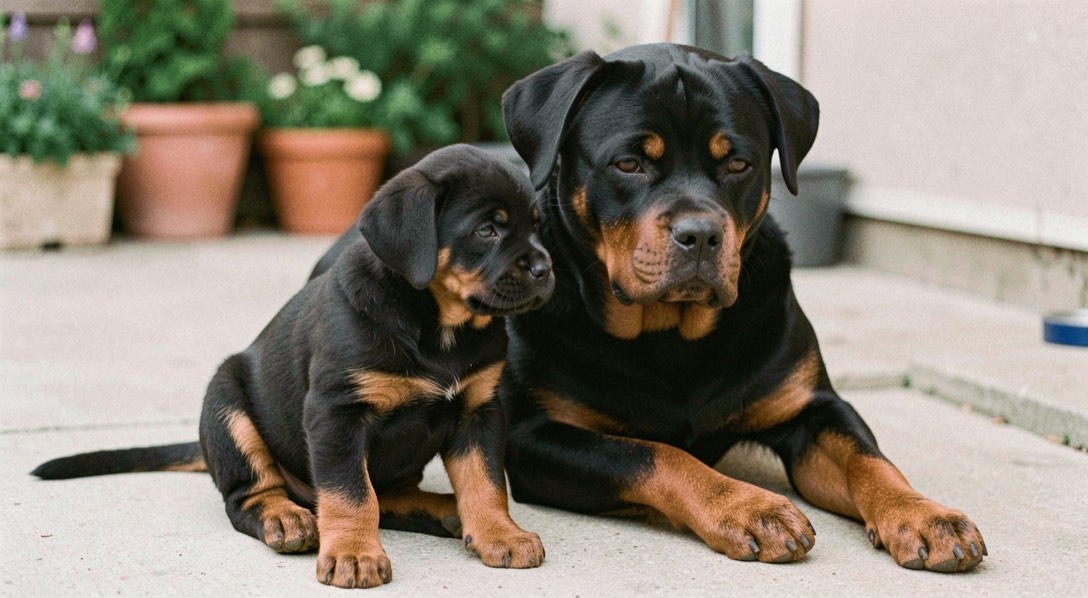
A Rottweiler puppy's first year is a sequence of predictable stages: roughly two weeks of eyes closed and milk only, weaning onto solid food between weeks three and eight, a vaccination series that runs to about sixteen weeks, a first heavy shed as the adult coat arrives, and a growth curve that a household diary tracks better than memory does. The diary matters because the same puppy changes shape, appetite and coat every few weeks, and a written record is what turns those changes into decisions.
What happens in the first two weeks?
A newborn Rottweiler is born blind, deaf and dependent on the dam for warmth and food. Weight is the only reliable early measure: a kitchen scale and the same time each morning will show whether a puppy is gaining or stalling. The dam handles feeding, cleaning and most of the temperature regulation, and the breeder's job is to keep the whelping box quiet and to watch for a puppy that is consistently pushed away from the milk bar.
For the household diary, the entries in this period are short: date, weight, and a note on whether the puppy fed. Nothing else is stable enough to record. Readers who want a second language on the same stage can follow a Czech dog journal such as Psí noviny Broskvička, which covers whelping and the first week at home from a Central European breeding perspective.
Eyes open around day ten to fourteen, and the ears follow. From that point the puppy starts reacting to light, sound and the smell of the dam's food, which is the first hint that weaning is not far off.
When does weaning start, and how does it move?
Weaning is a transition, not an event. Most litters see the first shallow pan of softened food somewhere between three and four weeks, offered while the dam is still nursing. The puppy is not eating yet in any real sense; it is investigating texture and taste. By five weeks the pan is a genuine meal, and by six to seven weeks the dam is refusing more and more of the nursing sessions on her own.
A household diary should carry the date each change happened, not just the fact that it happened. The useful entries are: first interest in solid food, first full meal without the dam, and the day the dam stopped allowing nursing. Those three dates explain a great deal later, including appetite dips and loose stool that arrive without any other cause.
Food type matters less than consistency in this window. Whatever the breeder uses, the puppy's gut is adapting to it, and switching brands in the middle of weaning adds a variable that is hard to read. If a change is necessary, the diary should show the day it started and what the stool looked like for the following three days.
What does the vaccination schedule actually cover?
A Rottweiler puppy's first-year vaccination series is a sequence, not a single appointment. The core vaccines are typically given in a series beginning around six to eight weeks, repeating every three to four weeks until the puppy is roughly sixteen weeks old, with rabies added according to local law. The reason for the repetition is maternal antibody interference: antibodies from the dam's colostrum can block the vaccine from taking, and they fade at different rates in different puppies.
This is why the last dose in the series matters more than the first. A puppy that received two doses and then stopped is not protected on the same schedule as one that finished the series. The diary entry for each visit should record the date, the vaccine given, the lot number if the clinic provides it, and any reaction in the following forty-eight hours.
Socialization and vaccination run in parallel, and the tension between them is real. The American Veterinary Society of Animal Behavior has published a position statement arguing that puppies can begin socialization classes before the vaccination series is complete, provided the environment is controlled and the other puppies are healthy. The diary is where that balance gets recorded: which outings happened, what the puppy met, and how it responded.
How does the coat change across the first year?
The Rottweiler coat is short, dense and straight, with a distinct undercoat that most owners do not see until the puppy starts blowing coat. The first heavy shed usually arrives somewhere between four and eight months, when the soft puppy coat gives way to the harsher adult texture. It is not a single week. It is a gradual change that a diary catches better than a photograph.
What to record: the first day loose hair comes out in quantity, how long the shedding period lasts, and whether the skin underneath looks clean or irritated. A Rottweiler with a dull, dry coat and flaky skin in the middle of a growth spurt is often simply a puppy whose nutrition and coat cycle are out of step, but the pattern is what tells the difference between a stage and a problem.
Bathing frequency should stay low in this period. The breed's coat is designed to shed dirt, and frequent washing strips the oils that keep it weather-resistant. Brushing with a rubber curry or a hound glove does more for the coat than shampoo does, and it gives the hand a daily read on skin condition.
Which checkpoints belong in a household diary?
The diary is not a medical record. It is a running log that makes patterns visible. The checkpoints that earn a line are the ones that change decisions later.
Weight, weekly, on the same scale. Growth in a Rottweiler is fast enough that a stall shows up in two weeks, and a stall is the first sign of a dozen different things.
Food, whenever the type or amount changes, with the date and the reason. Appetite is the earliest indicator of teething discomfort, stomach upset and stress, and it means nothing without a baseline.
Stool, described in one word per day. Loose, firm, soft, normal. Over a month, that column tells a story that a single vet visit cannot reconstruct.
Vaccination and deworming dates, with the product name. This is the entry most often needed in a hurry, at a clinic, on a weekend.
Coat and skin, noted at the start and end of each shedding period. The change from puppy coat to adult coat is a stage, and knowing when it began helps interpret everything that follows.
Training and socialization milestones, dated. First car ride, first stairs, first meeting with a calm adult dog, first nail trim. These are the entries that show a puppy's exposure history when behavior questions come up later.
Why does the diary matter more than memory?
A Rottweiler reaches roughly adult height somewhere between ten and twelve months, and adult weight later than that. The first year is the only period in the dog's life when the body changes this fast, and it is also the period when the owner is learning the dog. Memory compresses that year into a few vivid moments. A diary keeps the ordinary weeks, and the ordinary weeks are where the useful information lives.
The habit is simple: one page per month, a few lines per week, written at the same time each time. It does not need to be neat. It needs to be dated. A household that keeps it will find, at the one-year mark, that it has a record of a puppy's first year that no one else could have written.