Adoption
How a breed rescue works
The black box opened: where the dogs come from, what a dog costs before placement, why foster capacity is the only real limit, and what a state expects on paper.
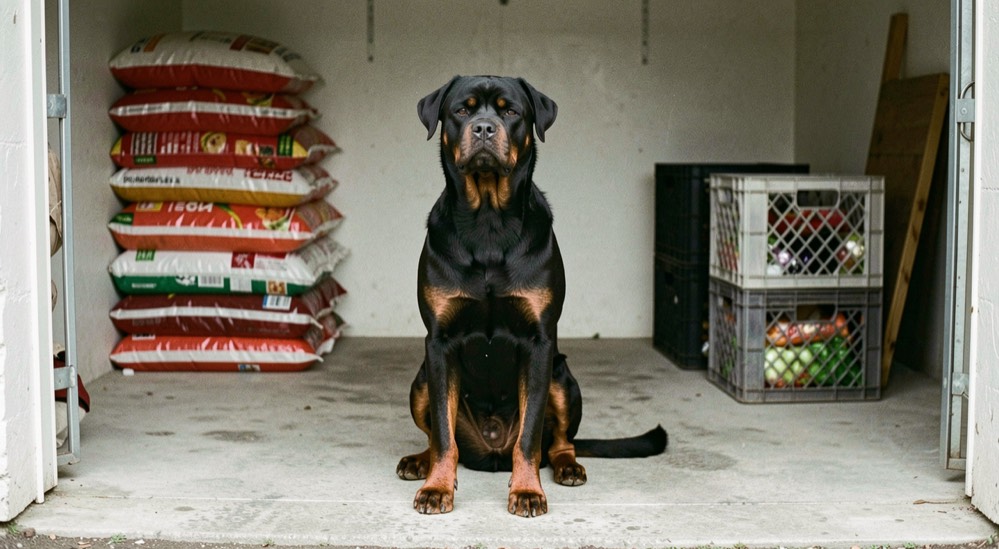
From the applicant side, a breed rescue reads as a sequence of gates: a long form, two phone calls, a visit, and a decision that can take weeks and can come back as no. From the inside it reads as a machine with one input nobody controls, which is dogs, and one constraint nothing relaxes, which is homes. Most of what looks like bureaucracy from outside is the machine protecting its constraint, and this page opens the box: where the dogs come from, what each one costs before it is placed, and why the whole system moves at the speed of its slowest volunteer.
Where the dogs come from
Three doors bring a strong adult dog into placement, and they open at unrelated speeds. Owners surrender dogs for the reasons households break: moves, illness, divorce, a new baby, a bite, a landlord. Shelters release dogs to breed experienced homes, often on deadlines that have nothing to do with the dog and everything to do with the room it is standing in. And returns come back through the door they left by, under the return clause that every responsible placement carries. The mix among the three shifts constantly, and a listing is a photograph of that moving queue rather than a description of the system. The system is the capacity to hold a dog while its file is built, and that capacity lives in houses rather than in kennels.
Foster capacity is the only real limit
Ask why a placement takes months and the answer is rarely a shortage of dogs and almost never a shortage of applicants. It is a shortage of places to put a ninety pound animal while it is evaluated, treated and observed. A foster home is a month of someone’s ordinary life given to a dog that arrives with no file, and the dog cannot be offered to a permanent household until that file exists. Every other step of the machine queues behind it: the veterinary work needs a place for a dog to recover in, the observation needs a household to do the observing, the meet and greet needs a settled dog to present. The post itself is written up for the people who hold it: foster homes are where a file gets written, and that role is the one whose expansion multiplies everything else.
What a dog costs before placement, and why fees do not cover it
The spend begins at intake and it is front loaded. An examination, the vaccinations a dog may be missing, heartworm testing and, when it comes back positive, a treatment that runs for weeks. An alteration. Identification. And when a dog is young enough and sound enough for the breed’s screening to mean something, the panel the parent club expects of breeding stock, hips and elbows radiographed and read, a cardiac clearance, eyes, a JLPP DNA result, can become part of the file a serious applicant asks to see. None of it is optional in the sense that skipping it moves the cost rather than removing it: what intake skips, the receiving household inherits as a question. The participation fee is a contribution to that spend, and the spend runs past it in both directions, because one dog arrives ready to place and another arrives needing a month of treatment before anyone can say what it is like to live with.
That is why the same breed carries different fees without either one being priced, and why the gap never closes on its own. The gap is the part the wider funding of the work carries, and the arithmetic of who carries it is the least advertised fact in placement. It is also the reason a slow answer about money deserves a second reading rather than a suspicious one: an organization that explains its spend is showing the file it is asking a fee to help carry.
Why an application is refused
Refusals read as judgment and are usually arithmetic. The fence is open at one corner and the dog has a history of roaming. The household is away eleven hours a day and the dog has already lost one home to that same schedule. There is a resident animal whose account of itself is unknown, or a landlord whose consent is verbal rather than written. None of these is a verdict on a household; each is a match that has not closed, and the coordinator who declines is holding the file open for a dog it would fit. The refusals that sting are the slow ones, and slow usually means something specific: the reference calls are still returning calls, or the foster home that knows the dog has yet to write the section of the file the question depends on. The candidate side of the machine, step by step, is the adoption process.
Transport and the volunteer chain
A dog that starts in one state and is placed in another has been moved by a chain of people who each drive a leg. The chain works because every link is short, and it fails loudly when one link is missing: a driver cancels, and a dog waits in a boarding kennel that is charging against a budget never built for it. Transport also concentrates the practical questions of a move, heat, paperwork and restraint, into a single afternoon, and the checklist for a crossing like that is the same one a household faces on a permanent move: across state lines is that checklist written out for the family rather than for the driver.
What a state expects on paper
The frame around all of this in North Carolina is chapter 19A of the General Statutes, which sets out how animal shelters and placement organizations register in the state. Registration is what separates an accountable placement structure from a name and an account on a social platform, and it is also the one place a household can check, without asking anyone, that the organization it is dealing with exists in law. The chapter frames the structure and leaves the placement policy, the fee schedule and the quality of the work to the people inside it, which is a distinction worth carrying: a statute settles that a structure exists, and nothing else about it. That line between what the law holds and what the work decides is the reason this magazine writes about the machine and leaves the names to the registry, and the rules behind that choice are set out in editorial standards.
| Post | What it covers | What makes it vary |
|---|---|---|
| Intake | First contact, evaluation, the opening of the file | Where the dog came from and in what condition |
| Veterinary | Examination, vaccination, heartworm, alteration, screening where warranted | What the dog arrived needing, and what it had already had |
| Foster | A month of ordinary life, and the notes that become the file | Homes open that month, and the fit of dog to house |
| Transport | Legs between states, drivers, and the dates that make them a route | Distance, weather, and how many links the chain has |
| Placement | Applications read, references called, visits made, matches closed | Applicant volume, and how fast files return |
| Administration | Registration, contracts, records kept past the handover | Volunteer hours, which is to say everything else |
Misreadings about how the machine works
- A decline is rarely a judgment on a household in the abstract. It is one dog with a known file being matched to one household with a known week, and the file is the part applicants never see.
- A participation fee is a contribution to a spend it does not meet. The gap is the part the wider funding carries, and it does not close by itself.
- Slowness is rarely indifference. The steps that take weeks are the steps that run on other people’s evenings and weekends.
- Registration in the state frame is a floor rather than a grade. It says the structure exists in law, and it says nothing about the work inside it.
One door of the machine is households, and it swings both ways. The dog that enters placement through rehoming a dog arrives with a file that a previous household wrote, and the quality of that file does more for the dog’s next placement than anything that happens afterward. The machine is only as good as the paper moving through it, and some of that paper is written at kitchen tables.
The same machinery, seen at household scale, fills three pages. The file assembled from fragments is tracing a dog’s record, its digital version lives in the dog’s file on the family computer, and the inbox the paperwork creates is defended in when the message about a dog looks wrong.